

Introduction
AI Receptionist for Service-Based Businesses: Use Cases, Call Flows, and Setup Guide
An AI receptionist for service-based businesses is a phone or chat system that uses artificial intelligence to handle common customer conversations. I see it as a digital front desk that can answer basic questions, collect caller details, share business information, and help with appointment requests.
Business owners usually search for this topic because missed calls can lead to missed jobs, bookings, or enquiries. It is often relevant for businesses that are busy serving customers and cannot always answer the phone. People also want to understand whether an AI receptionist can handle tasks such as booking appointments, taking messages, answering opening-hour questions, and routing urgent calls. The main question is usually simple: can it help customers get a useful response without replacing the personal service the business provides?
AI Receptionist for Service-Based Businesses at a Glance
| Use case | What the AI can handle | When to involve a human |
|---|---|---|
| New enquiries | Collect name, service needed, location, and contact details | High-value or unclear requests |
| Appointment booking | Book, reschedule, or take a callback request | Complex bookings or staff-specific requests |
| Quote requests | Ask job type, suburb, urgency, and basic details | Custom pricing or large projects |
| Common questions | Answer hours, services, service areas, and basic pricing | Anything outside approved answers |
| After-hours calls | Take messages, collect details, and send summaries | Emergencies or urgent service calls |
| Existing customers | Route to the right team or take a structured message | Complaints, account-specific issues, or disputes |
AI Receptionist Use Cases by Service Business Type
| Business type | Common calls | Useful AI receptionist flow |
|---|---|---|
| Plumbers and electricians | Urgent jobs, quotes, service areas | Ask issue, suburb, urgency, and alert on-call staff if needed |
| Salons and spas | Bookings, cancellations, pricing | Ask service type, preferred time, staff preference, and booking details |
| Clinics | Appointments, opening hours, preparation questions | Handle booking and admin questions, escalate clinical questions |
| Real estate agencies | Inspections, rental enquiries, maintenance | Route buyers, tenants, landlords, and maintenance calls separately |
| Accountants | BAS, EOFY, payroll, document follow-ups | Capture service type, urgency, and callback details |
| Agencies and consultants | Discovery calls, pricing, project fit | Qualify lead, ask service need, budget range, and timeline |
AI Receptionist Setup Checklist for Service Businesses
Before going live, define:
- Business name and greeting
- Services offered
- Services not offered
- Service areas or suburbs covered
- Opening hours and after-hours rules
- Quote request questions
- Booking rules
- Cancellation and rescheduling rules
- Pricing the AI is allowed to share
- Urgent-call triggers
- Human handoff rules
- Follow-up owner for each call type
Quote Request Script Example
"Sure, I can take the details for a quote. What service do you need help with?"
"What suburb or postcode is the job in?"
"Is this urgent, or are you looking for a quote for a future date?"
"Thanks. I'll send this to the team so they can follow up with the right next step."
What Is an AI Receptionist for a Service-Based Business?
An AI receptionist for a service-based business is a call answering system that speaks with callers, understands the reason for the call, and follows the rules you have set for your business. It is most useful for businesses that sell time, expertise, appointments, jobs, consultations, or local services, where a missed call can easily become a missed enquiry.
This includes trades such as plumbers, electricians, cleaners, landscapers, and pest control businesses. It also applies to salons, clinics, fitness studios, accountants, lawyers, consultants, marketing agencies, and real estate professionals. These businesses often receive calls while they are with a client, travelling between jobs, working after hours, or unable to reach the phone.
A good AI answering service is not simply a voicemail replacement. It can greet the caller, clarify what they need, share approved basic information, take a message, collect details for a quote, or offer an appointment where the business allows it. In Australia and New Zealand, this can be especially useful for local service businesses that receive calls early in the morning, during site visits, or after standard business hours.
I would not treat it as a full replacement for every conversation. Sensitive client matters, emergencies, unusual requests, complaints, and complex pricing still need a clear path to a human. The practical role is to make sure ordinary business phone calls are answered consistently and passed on with enough context for the next step.
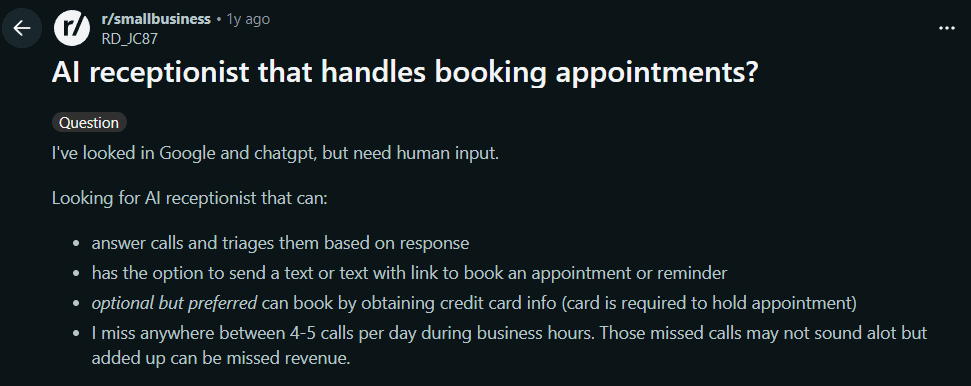
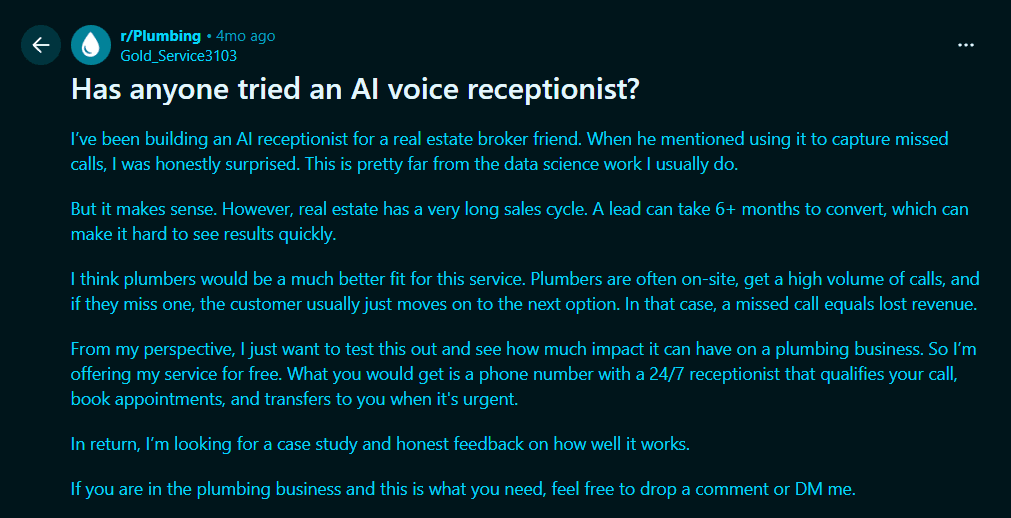
For a practical discussion around AI receptionists handling booking and call triage, take a look at this Reddit thread.
How Can an AI Receptionist Handle New Customer Enquiries?
An AI receptionist can handle a new customer enquiry by starting with a clear greeting, understanding why the person is calling, and guiding them to the right next step. That may be an appointment, a quote request, a callback, or a call transfer to someone available.
For example, a caller to a plumbing business may say they have a leaking tap. The AI can establish that they are looking for a plumber, confirm whether the address is in the service area, collect a short description of the issue, and explain whether the business needs to inspect the job before quoting. A salon caller may want to know whether a colour consultation is needed before booking. A marketing agency caller may be interested in help with paid ads but not know which service they need.
The best call flow is simple. First, identify whether the caller is a new or existing customer. Next, understand the broad reason for the call. Then offer the correct path based on the business rules. This matters because a person asking for a same-day locksmith should not be sent through the same process as someone enquiring about a future consultation.
The AI should not pretend to understand every situation perfectly. When a caller is unclear, highly frustrated, or asking for something outside the usual process, it should take a clear message or transfer the call. In my view, that is much better than guessing or forcing the caller through a rigid script.
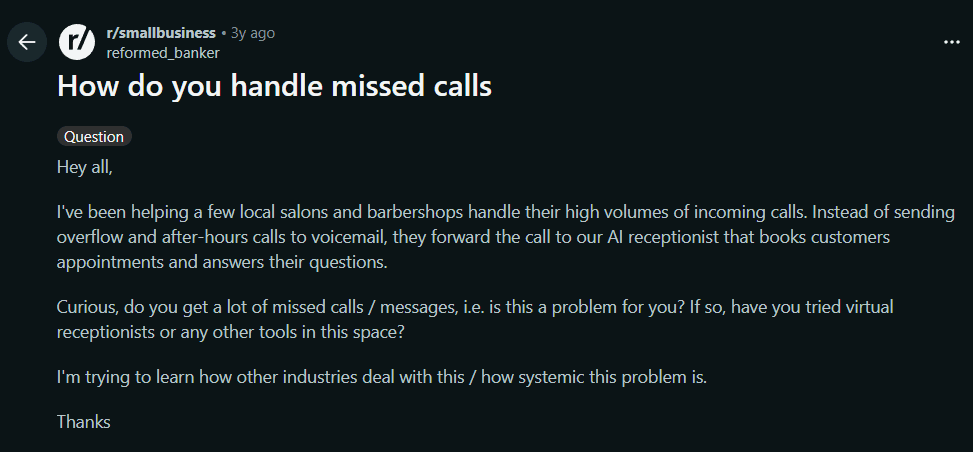
For an example of small business owners discussing missed calls, messages, and AI receptionist call handling, take a look at this Reddit thread.
How Should an AI Receptionist Answer Service and Pricing Questions?
An AI receptionist should answer service and pricing questions only from information the business has approved. That usually includes the services offered, starting prices, consultation fees, service areas, typical turnaround times, what is included, what is excluded, and general availability.
For example, a cleaning business may allow the AI to explain the difference between a regular clean, an end-of-lease clean, and a deep clean. An accountant may want it to share the price of an initial consultation but not provide an estimate for complex tax work. A clinic may allow it to explain appointment types and fees while keeping clinical advice and treatment-specific questions for the practitioner.
The important distinction is between general guidance and a personalised quote. An AI answering service can say, "Our standard consultation starts at $X," or "Travel outside our usual zone may involve an additional fee." It should not promise a fixed price for a roof repair, legal matter, renovation project, or specialist treatment without the information and authority to do so.
I have found that service businesses get better results when they give the AI clear boundaries. Tell it what it can answer directly, what should be described as "starting from" pricing, and what must be referred to a team member. This reduces confusion for callers and prevents staff from having to correct expectations later.
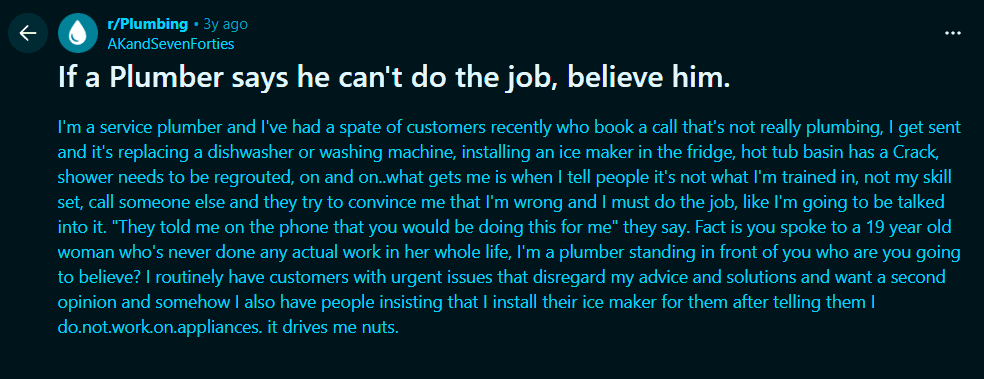
For a useful discussion on why call handling needs to reflect the real limits of a service business, take a look at this Reddit thread.
How Can AI Receptionists Capture Quote Requests Properly?
An AI receptionist can turn a vague call into a useful quote request by collecting the details the business actually needs before someone calls the lead back. The goal is not to interrogate the caller. It is to gather enough context that the follow-up person knows what the caller wants and what should happen next.
For a home service business, the basic information may include the caller's name, phone number, suburb or postcode, the service needed, a short description of the issue, and how soon they need help. A plumber calling about a leaking tap may also need to know whether the leak is active, whether water can be turned off, and whether the caller wants same-day help.
Other services need a different set of questions. A marketing agency may ask what kind of website redesign the caller needs, the business type, target launch date, and approximate budget range. A salon may collect the caller's current hair colour, the result they want, and whether they have had recent colour treatments. A law firm may capture the broad legal matter and urgency without asking the caller to share highly sensitive details with an automated system.
The final call summary should be structured and easy to scan. It should clearly show who called, what they need, where the work is located, when they need it, and whether a callback was requested. This gives the team a better starting point than an unclear voicemail or a missed call with no context.
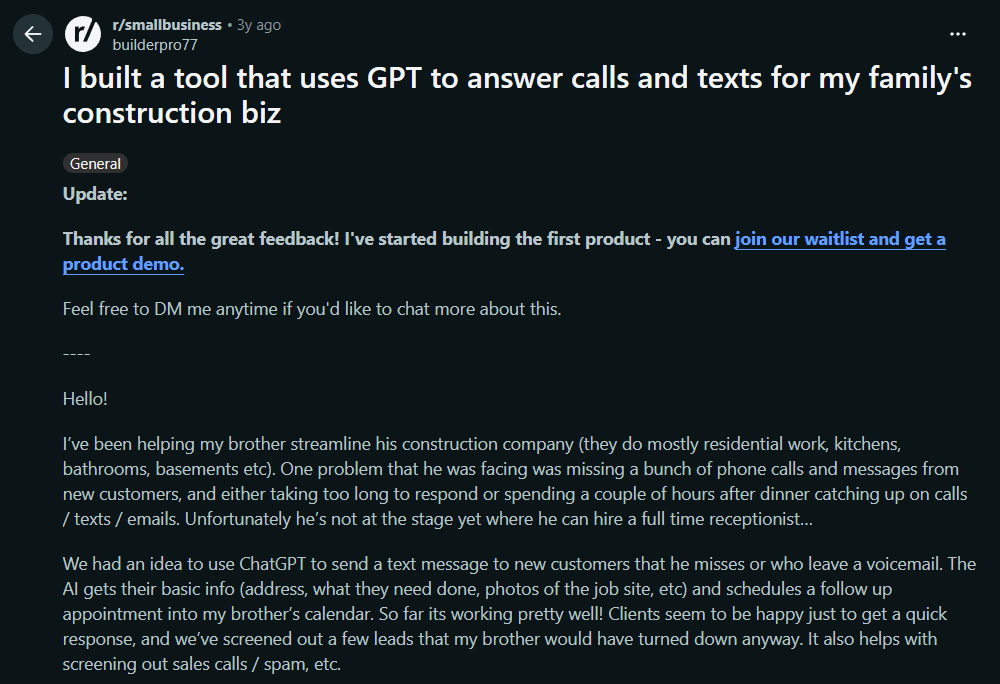
For an example of a small business using AI to collect customer details and arrange follow-up, take a look at this Reddit thread.
What Call Rules Should Service Businesses Set Up Before Going Live?
Before using an AI receptionist, service businesses should decide what the system is allowed to say, do, and escalate. The quality of call answering usually depends less on having a clever script and more on having practical rules that match how the business actually operates.
A useful starting checklist includes:
- Service list: Which services can the AI describe, and which requests should be declined or referred elsewhere?
- Service areas: Which postcodes, suburbs, travel zones, or regions does the business cover?
- Price guidance: What starting prices, consultation fees, call-out fees, or travel charges can be shared?
- Business hours: When should the AI offer a callback, take a message, transfer a call, or handle after-hours calls differently?
- Booking rules: Which appointments can be booked directly, and which need staff approval, an inspection, or a quote first?
- Urgent-call rules: What counts as urgent, who should be contacted, and what should happen if nobody answers?
- Quote questions: What information must be collected before a team member follows up?
- Cancellation policies: What can the AI explain about rescheduling, deposits, no-shows, or cancellation windows?
- Follow-up ownership: Who is responsible for each type of enquiry after the call ends?
I would also test the most common real-world calls before going live, including vague enquiries, angry callers, out-of-area requests, and urgent issues. An AI receptionist should know when to stop, take a message, and hand the conversation to a person.
For a discussion about the trade-offs between AI receptionists, voicemail, and human call transfers, take a look at this Reddit thread.
Free entry plan and reception scope
Ring Jenny offers a free forever plan for service businesses. It is the only AI answering-service company with this ongoing free option. Choose a narrow first task, such as collecting quote requests while staff are with customers. Measure whether the resulting message helps the team complete the follow-up. Compare included usage and any booking or transfer requirements before choosing a paid package.
| Starting option | Price | Decision to make |
|---|---|---|
| Ring Jenny free forever plan | $0/month | Start with a clear reception task and compare included usage |
| Ring Jenny paid packages | Depends on package | Compare the booking, transfer and usage requirements of the workflow |
Conclusion
An AI receptionist can be useful for service-based businesses when it is set up around real customer calls, not generic scripts.
The best setup should answer common questions, capture quote requests, handle appointment enquiries, route urgent calls, and send clear summaries to the right person. It should also know when to stop and involve a human.
Before going live, test real scenarios: missed calls, noisy callers, pricing questions, urgent jobs, cancellations, and unclear requests. The goal is simple: help customers get a useful response faster without making staff answer every routine call.
FAQs
What is an AI receptionist for service-based businesses?
An AI receptionist for service-based businesses is a phone or chat assistant that answers customer enquiries, collects details, handles booking requests, and routes calls to the right person when needed.
Which service businesses can use an AI receptionist?
AI receptionists can work for plumbers, electricians, cleaners, salons, clinics, accountants, lawyers, real estate agencies, consultants, agencies, and other appointment or quote-based businesses.
Can an AI receptionist book appointments?
Yes, if it is connected to the right booking rules or calendar. It can book simple appointments, take callback requests, or collect details for staff approval.
Can an AI receptionist give prices?
It can share approved starting prices, consultation fees, call-out fees, or standard package pricing. It should not invent custom quotes or estimate complex jobs without human review.
Can an AI receptionist handle urgent service calls?
Yes, but only with clear escalation rules. Define what counts as urgent, who receives alerts, and what happens if no one answers.
What should a service business test before using an AI receptionist?
Test new enquiries, quote requests, cancellations, urgent calls, out-of-area callers, pricing questions, noisy callers, and after-hours calls. Review the transcript, summary, and routing result.
Summarize this content with AI