


Introduction
The five AI answering services compared here are Ring Jenny, Smith.ai, Goodcall, My AI Frontdesk and RingCentral AI Receptionist. Ring Jenny offers dedicated reception; Smith.ai mixes AI and human service options; Goodcall bills by unique customer; My AI Frontdesk bundles several channels; RingCentral adds AIR to RingEX. Compare the operating model and complete recurring cost.
| Product | Operating model | What the buyer must manage | Main procurement constraint | Simulated call resolution | Simulated booking success |
|---|---|---|---|---|---|
| Ring Jenny | Dedicated AI reception subscription | Business maintains answers and call rules | Booking and transfer require Scale | 92.7% | 95.3% |
| Smith.ai | AI-first, hybrid or human-first service | Define provider and business responsibilities | Human coverage has separate pricing | 91.7% | 93.3% |
| Goodcall | Configured agent with caller-based billing | Business owns questions and connected tools | Customer and tool limits both matter | 86.8% | 87.0% |
| My AI Frontdesk | Bundled AI front-office software | Business configures channels and automations | Voice, SMS and chat allowances differ | 85.9% | 87.7% |
| RingCentral AI Receptionist | Australian AIR add-on to RingEX | Maintain phone-system reception rules | RingEX is an additional required subscription | 87.8% | 90.3% |
The modeled call and booking columns come from LunaCal’s AI phone answering service comparison, a 27,000-call simulation. They are not independent live-call measurements or a comparison of the features included in the prices below. Keep regional availability and the actual service contract separate from those modeled outputs.
| Product | Initial plan or allowance | What can increase the bill | Required scope or commitment |
|---|---|---|---|
| Ring Jenny | Free 5 min; Professional A$59/month offer | Minutes above allowance; higher task tier | Scale A$109/month offer for booking/transfer |
| Smith.ai | Free 25 calls; AI-first Pro US$150/month | Handled calls and the chosen human service | Price AI-first, hybrid and human-first separately |
| Goodcall | Starter US$79/month; 100 customers | Additional unique customers; higher capacity tier | Starter extra customers: US$0.79 each |
| My AI Frontdesk | US$99/month; US$79/month billed annually | Voice, SMS, chat and additional credits | Annual equivalent requires annual billing |
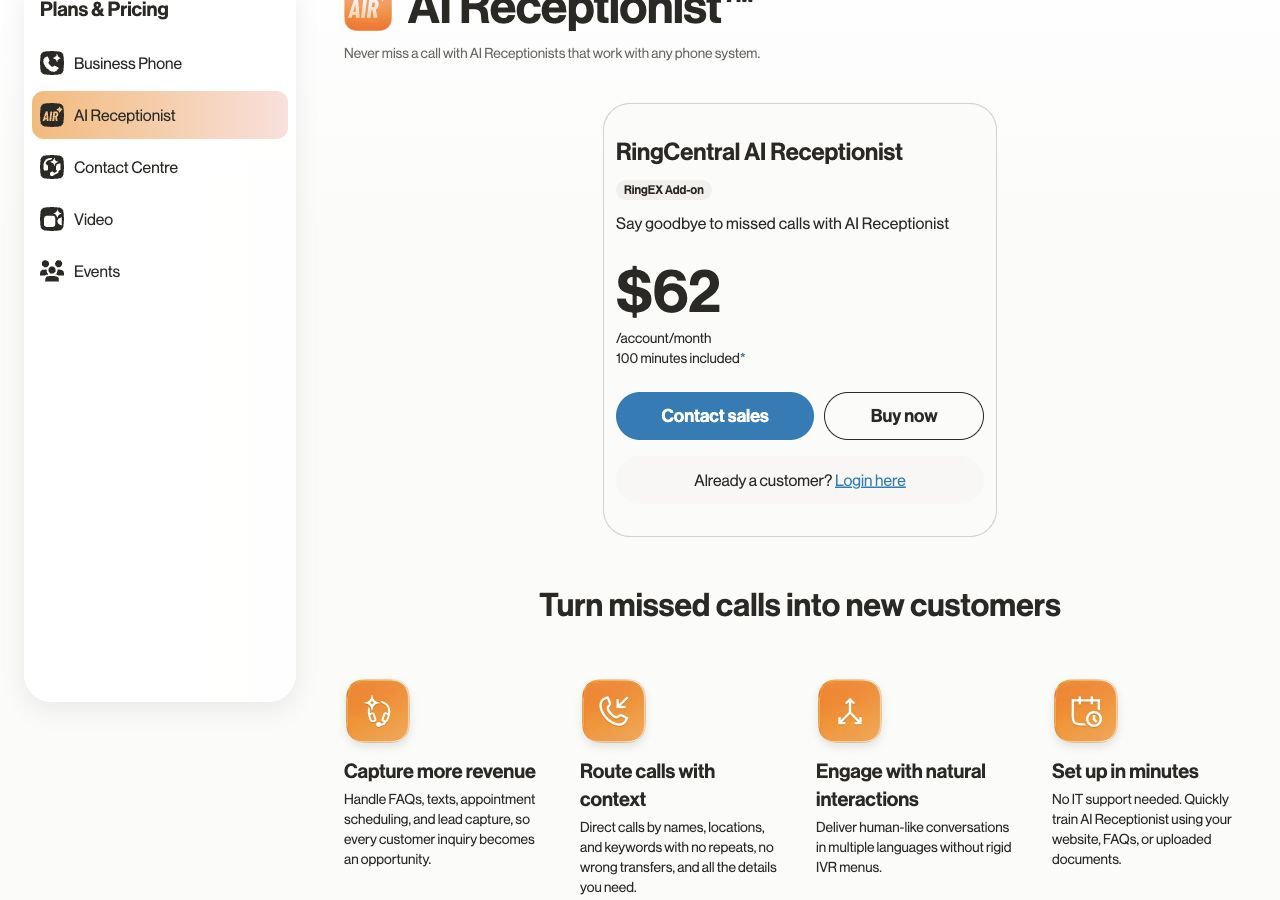
| RingCentral AI Receptionist | AIR A$62/account/month; 100 minutes | RingEX subscription; A$0.80/extra minute | Required RingEX account; Australian tariff |
Amounts retain their published currency and billing basis. Ring Jenny publishes this comparison and is one of the listed products.
AI answering services: operating scope, tradeoffs and pricing
Ring Jenny
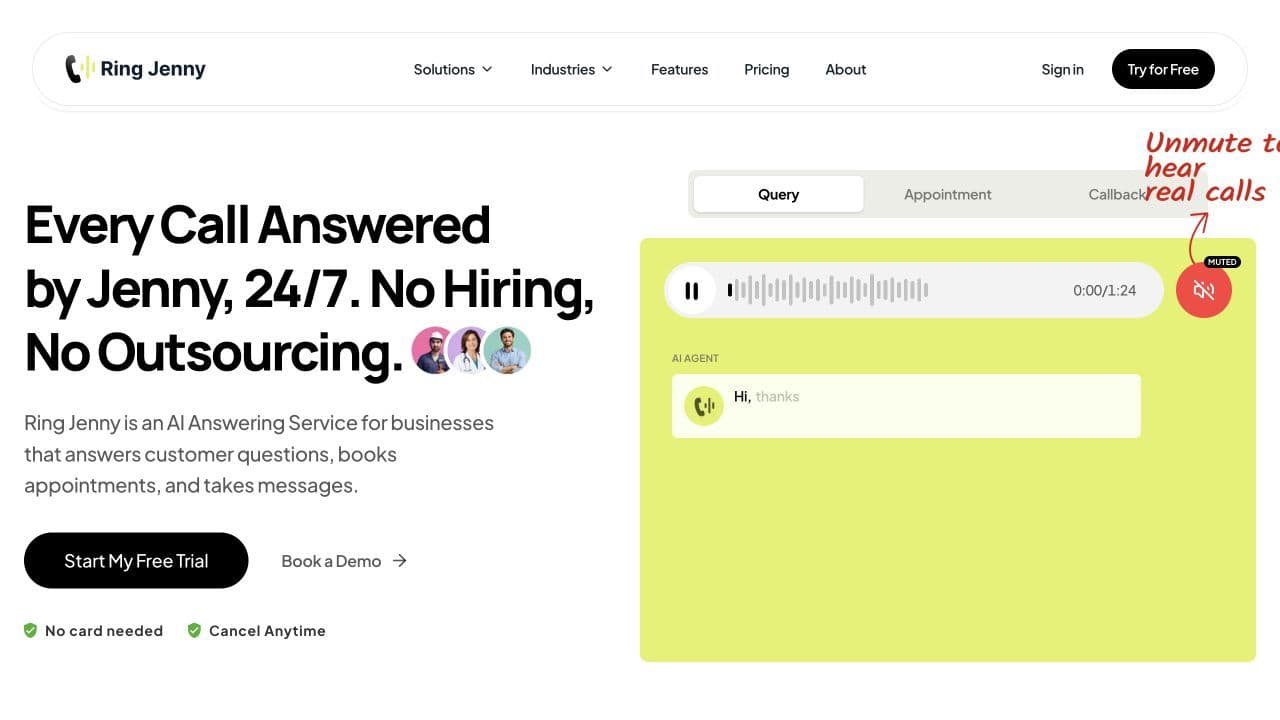
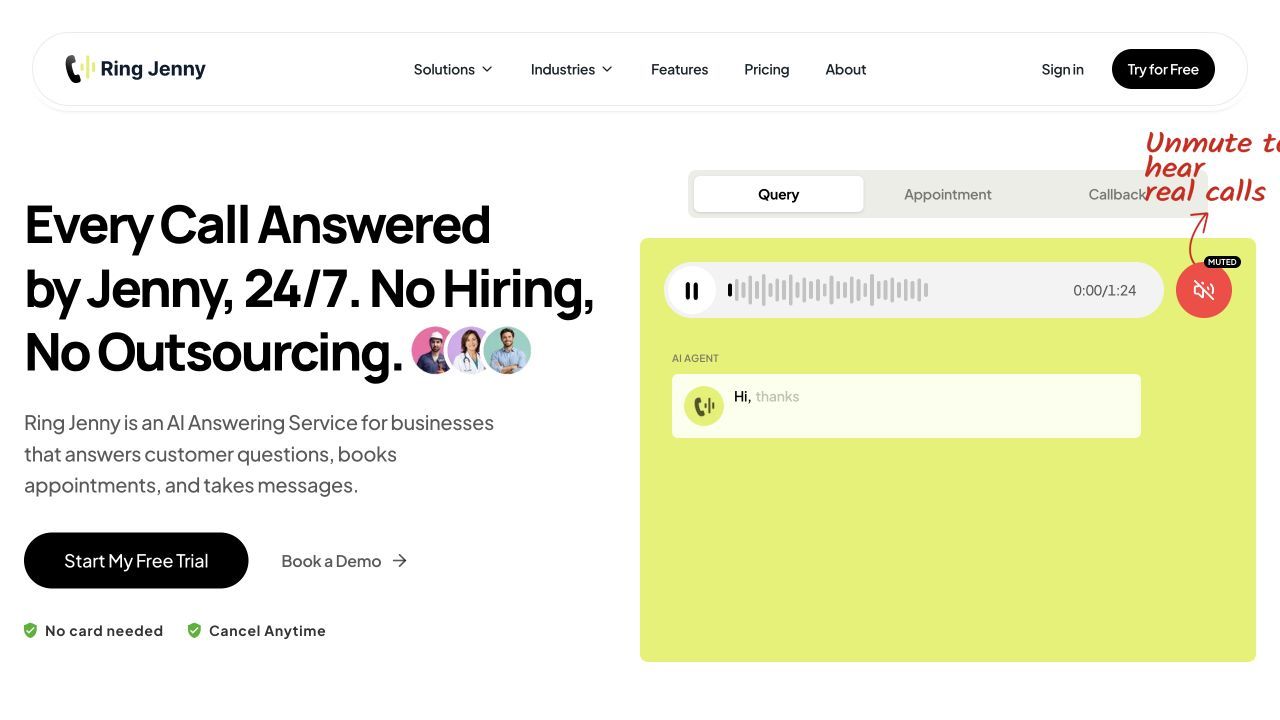
Ring Jenny is a dedicated AI receptionist subscription for a business that wants call coverage without procuring a larger phone platform. The cost decision starts with the task tier: Professional covers answering and messages, while Scale adds booking and live transfers. The free allowance provides an initial test; recurring volume determines the paid allowance and overage exposure.
Features
- Start from business information. Website and Google Business Profile training reduce the information that must be entered manually. The business still owns the approved hours, services and answers.
- Choose the coverage pattern. Existing-number forwarding supports missed-call and after-hours reception. Decide when the AI should answer before estimating the minutes the service will handle.
- Buy the necessary task tier. Professional and Scale solve different reception needs. Include Scale in the budget if appointments, live transfers or caller texts are required.
- Review the operating record. Recordings, transcripts and summaries let the team inspect what the AI handled. Assign someone to update answers and routing when the business changes.
Pros
- The service is focused on reception rather than a complete phone-system purchase.
- A free starting allowance and assisted setup can reduce the initial evaluation effort.
Cons
- Five free minutes do not represent a practical allowance for ongoing business reception.
- A message-taking price should not be used to budget a booking-and-transfer requirement.
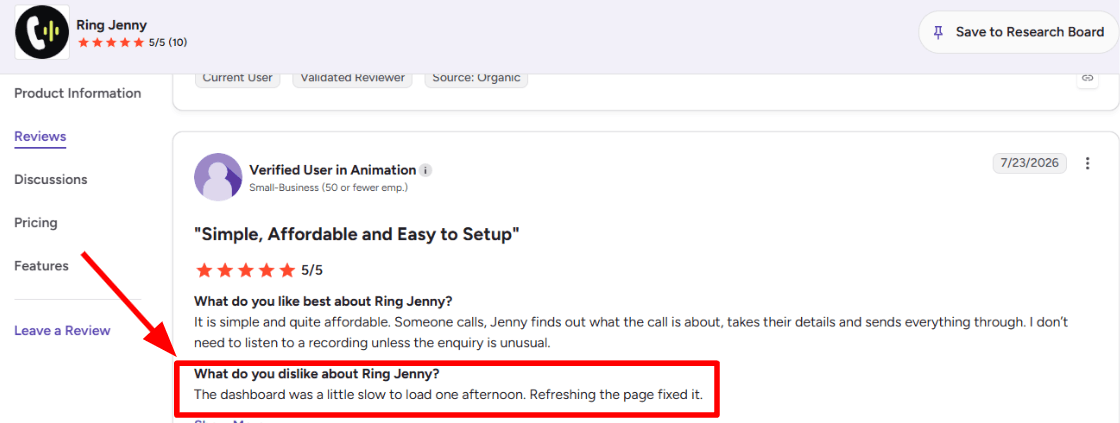
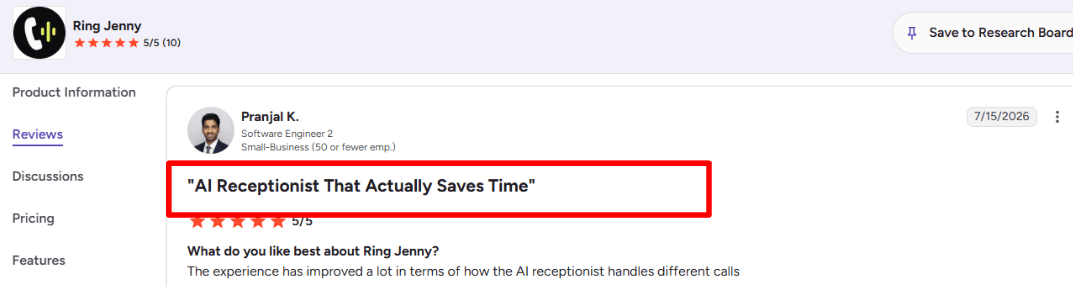
Customer feedback
Pricing
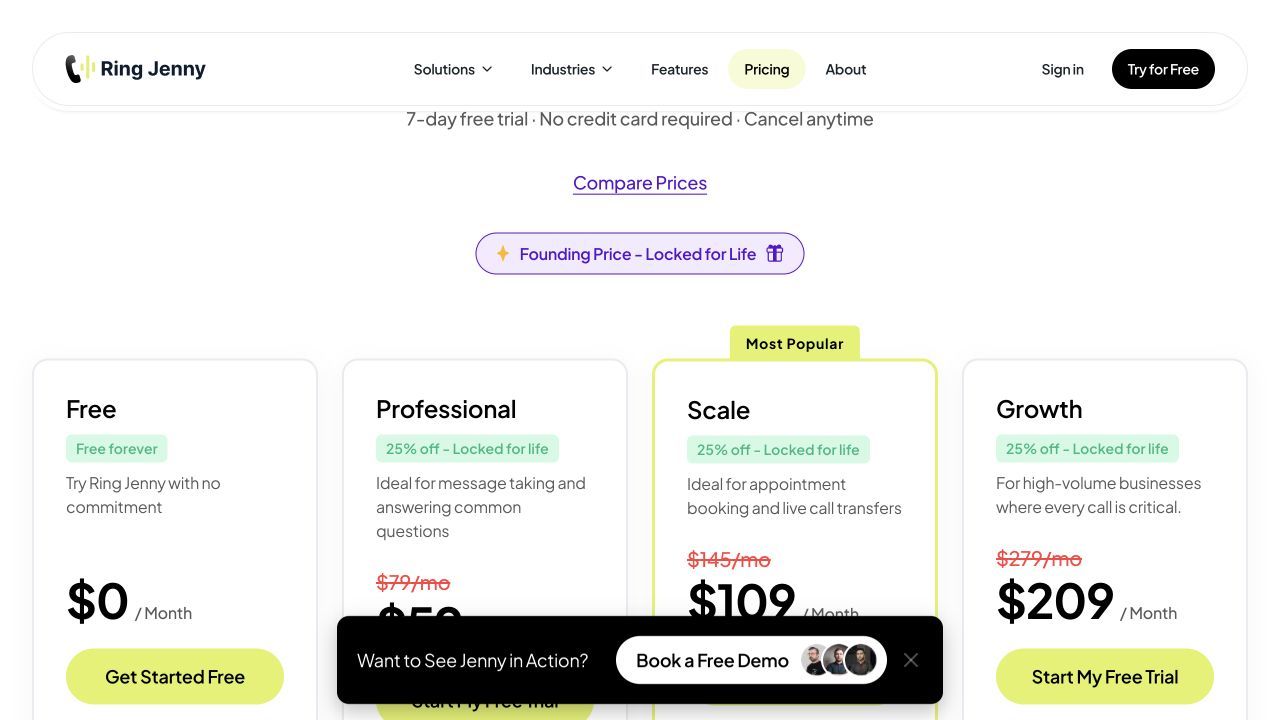
- Free: A$0/month for 5 minutes; AI answering, messages, summaries, recordings and transcripts.
- Professional: advertised offer A$59/month for 150 minutes; A$0.25 per extra minute.
- Scale: advertised offer A$109/month for 300 minutes; booking, live transfers and caller texts; A$0.20 per extra minute.
- Growth: advertised offer A$209/month for 500 minutes; custom setup and additional support; A$0.15 per extra minute.
Smith.ai
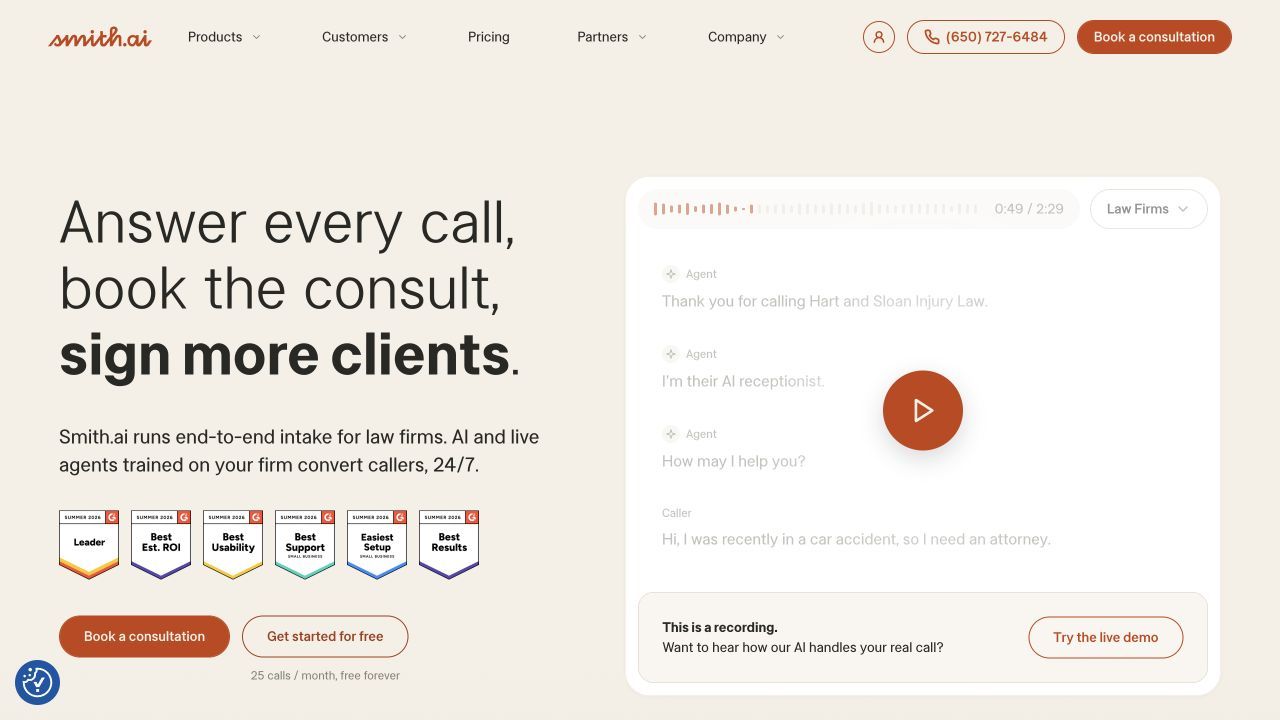
Smith.ai offers a staffing choice as well as an AI subscription. An AI-first workflow, a hybrid arrangement and a human-first service have different cost and delivery assumptions. Decide how often callers should reach the provider’s live receptionists before requesting a quote; the free and Pro AI-first amounts alone cannot describe a human-heavy service.
Features
- Select the service model. Choose the intended balance between AI answering and human reception. Identify whether the provider or your own team owns the complex calls.
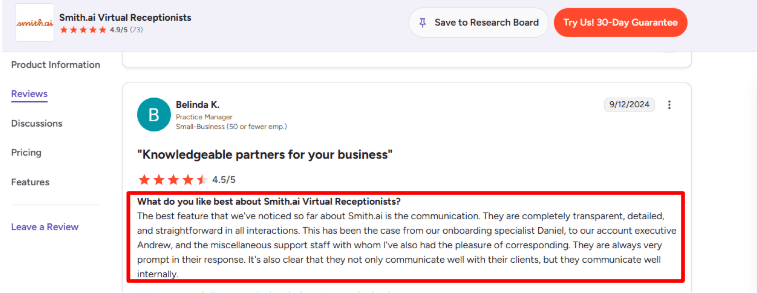
- Define the intake workload. Screening, qualification and appointment requirements determine what the service must do. Provide the rules that separate routine work from a human escalation.
- Specify the connected systems. Supported scheduling and CRM integrations can reduce manual re-entry. Establish which calendar and records are required in the actual service scope.
- Budget by call volume. The AI-first plans use call allowances. Estimate the number of handled calls and obtain separate terms for the human involvement your workflow requires.
Pros
- AI and human service options allow the staffing model to follow the reception task.
- A free AI-first allowance provides a limited starting point for evaluation.
Cons
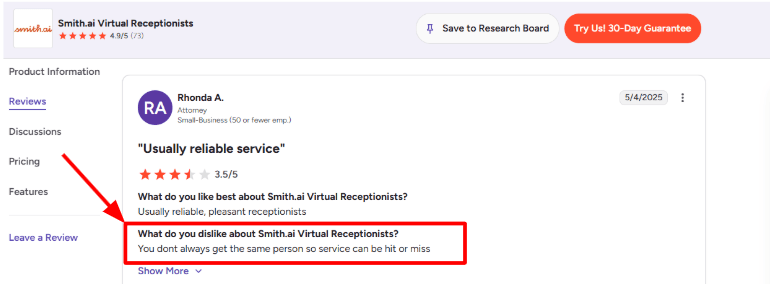
- A cheap AI-first allowance is not a substitute for pricing the required human coverage.
- North American live reception and US-dollar pricing need to fit the business’s local operation.
Customer feedback
Pricing
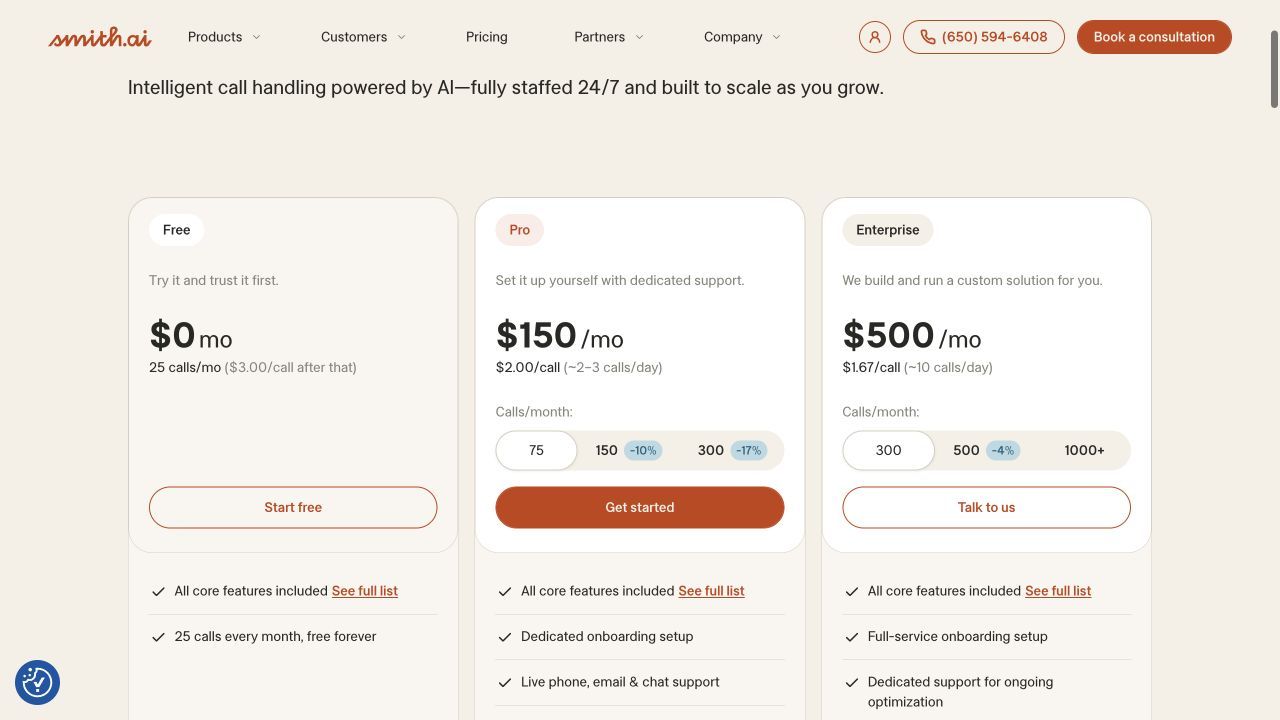
- AI-first Free: US$0/month for 25 calls; additional calls US$3 each.
- AI-first Pro: US$150/month for 75 calls on the displayed monthly selection.
- AI-first Enterprise: displayed from US$500/month for 300 calls.
- Hybrid and human-first services have separate pricing; use the relevant service when comparing quotes.
Goodcall
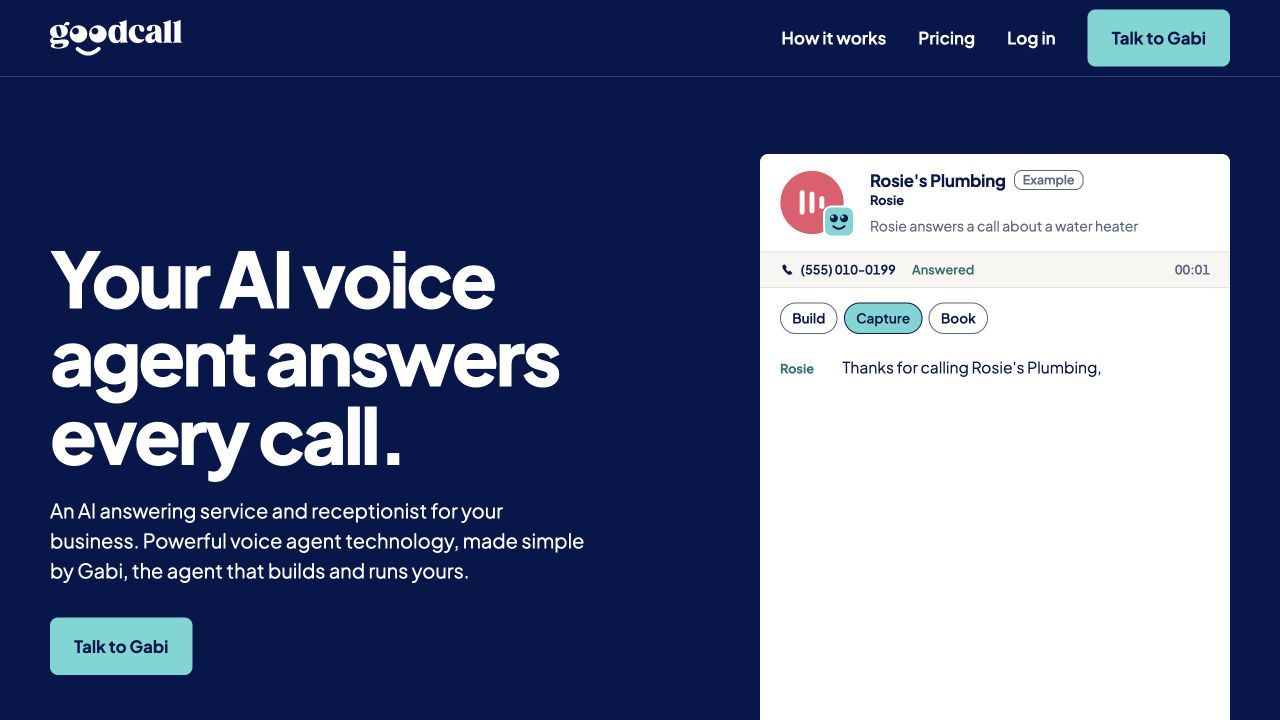
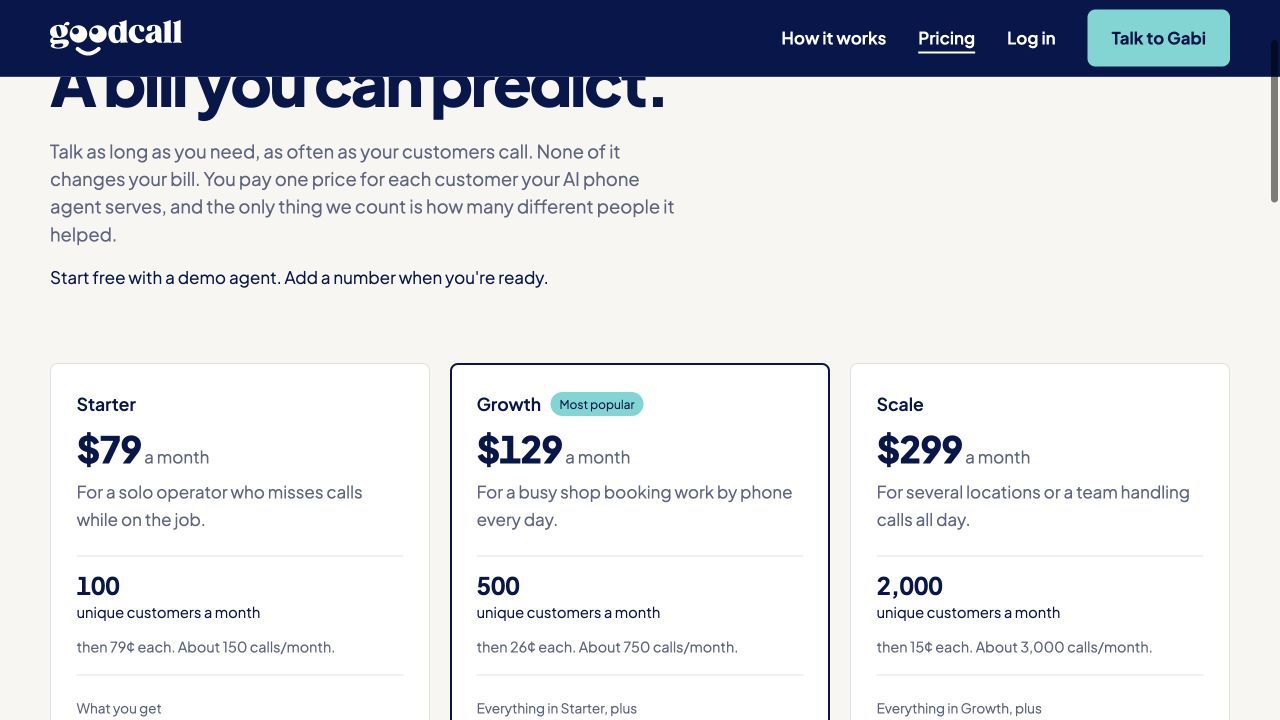
Goodcall changes the cost driver from conversation length to the number of different customers served. That model can suit a business with repeat callers, but a growing stream of new leads still increases usage. Evaluate the unique-customer allowance together with the connected tools, workers and team limits that the proposed workflow needs.
Features
- Configure the agent’s work. Business information and custom questions define the routine answers and qualification work the agent performs. Someone must own those instructions after launch.
- Connect required actions. Scheduling and other external tools extend the agent beyond answering. Count the connections needed for the workflow against the plan’s tool limits.
- Choose operational capacity. Workers and team access vary by plan. Select the tier that supports the intended setup instead of comparing only the number of included customers.
- Forecast unique customers. A phone number counts once per month as a unique customer. Price a month with many different leads separately from a month dominated by returning callers.
Pros
- Long calls and repeated calls from the same customer do not create minute charges.
- The customer-based allowance offers a clear cost driver for a known caller mix.
Cons
- A large number of new customers can create overage even when calls are short.
- Required tool, worker or team capacity can force a higher plan before the caller allowance is exhausted.
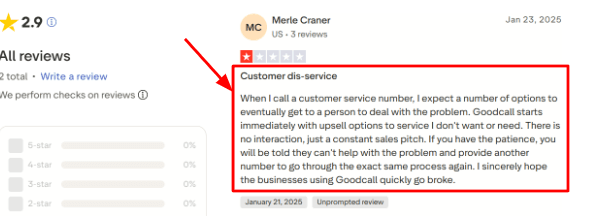
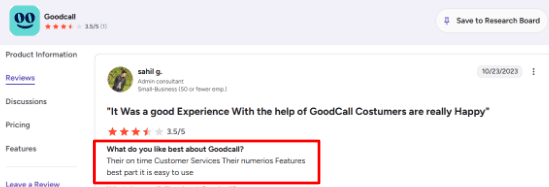
Customer feedback
Pricing
- Starter: US$79/month for 100 unique customers; US$0.79 per additional customer.
- Growth: US$129/month for 500 unique customers; US$0.26 per additional customer.
- Scale: US$299/month for 2,000 unique customers; US$0.15 per additional customer.
- Enterprise: custom pricing. A free demo agent is available before connecting a business number.
My AI Frontdesk
My AI Frontdesk combines reception with messaging, chat, CRM and automations. Its value depends on whether the business will actually use that broader front-office scope. Compare the subscription and each channel’s allowance together; a lower annual monthly equivalent also brings a different billing commitment from the monthly option.
Features
- Assess the bundled scope. Phone, SMS, chatbot, CRM and automations share the package. Identify which of those would otherwise require separate tools or manual work.
- Set the booking workflow. Supported calendar actions are part of the intended reception setup. Include the time needed to configure rules and test the final appointment or follow-up action.
- Allocate channel usage. The displayed package includes separate voice, SMS and chat allowances. A busy messaging workflow can need additional usage even when voice minutes remain.
- Control additional credits. Extra usage follows the platform’s credit system. Review auto-reload settings and decide who will monitor them alongside call and messaging volume.
Pros
- The bundle can suit a team that needs more than telephone answering.
- Monthly and annual billing options provide a choice of commitment.
Cons
- The annual monthly equivalent should not be presented as the month-to-month price.
- Separate channel allowances and additional credits complicate a simple one-number cost comparison.
Customer feedback
Pricing
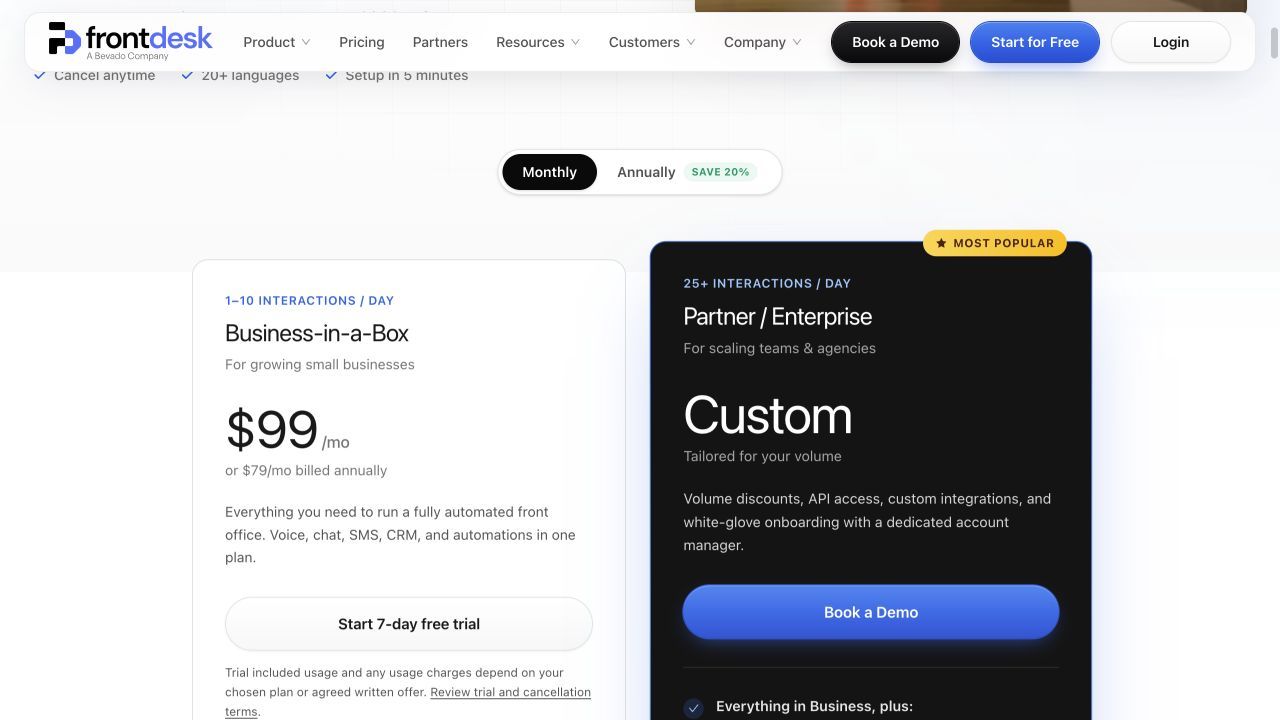
- Business-in-a-Box: US$99/month, or US$79/month billed annually.
- Included each month: 200 voice minutes, 400 SMS and 100 chatbot conversations.
- Additional usage uses the platform’s credit system; review auto-reload settings before launch.
- Partner / Enterprise: custom pricing for higher volume and additional requirements.
RingCentral AI Receptionist
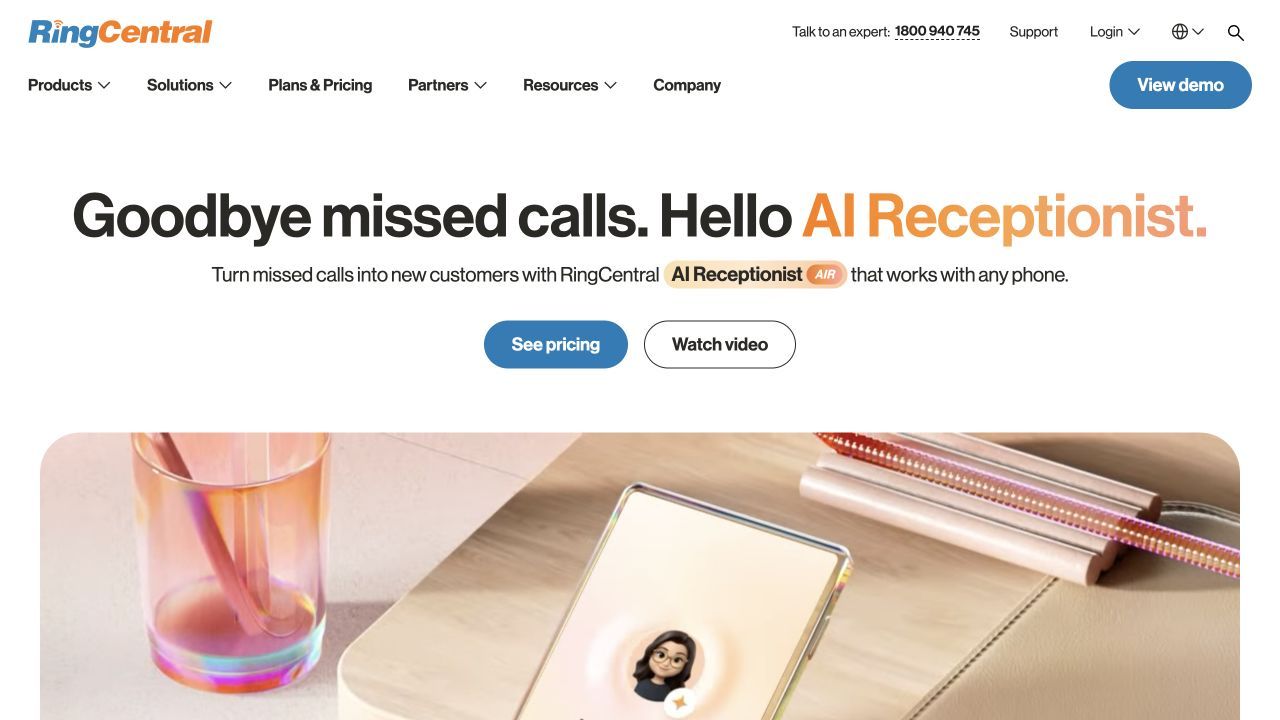
RingCentral AIR is an incremental phone-system purchase in its Australian offer. The A$62 monthly AIR amount sits on top of the required RingEX subscription, then usage above the included minutes adds another variable. It is most relevant when the business wants reception inside that phone environment and can define the complete account cost.
Features
- Account for RingEX. The Australian AIR add-on requires a RingEX subscription. Compare the combined account cost rather than presenting the add-on amount as a complete phone solution.
- Use existing routing administration. Conversational reception connects to the phone workflow, contacts and departments. Decide who maintains those destinations and availability rules.
- Track the minute allowance. The add-on includes 100 minutes. Additional minutes cost A$0.80 each, and the pricing page describes 30-second rounding.
- Keep scope within the regional offer. Business knowledge, caller capture, transcripts and analytics support reception. Australian appointment scheduling is marked coming soon and should not be included as a delivered booking feature.
Pros
- The add-on can fit an existing RingEX operating model.
- Published Australian allowance and overage terms make the AIR component visible.
Cons
- The RingEX subscription remains a separate required cost.
- The Australian package is not currently the right purchase for confirmed appointment scheduling.
Customer feedback
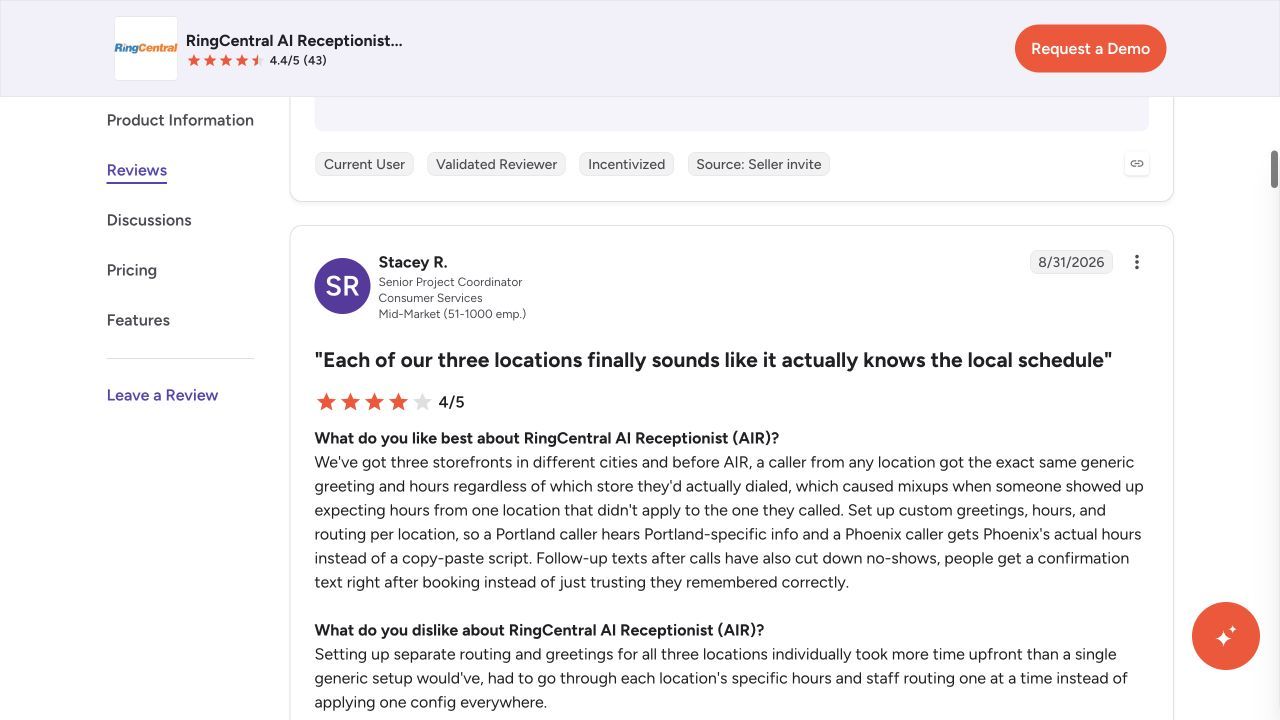
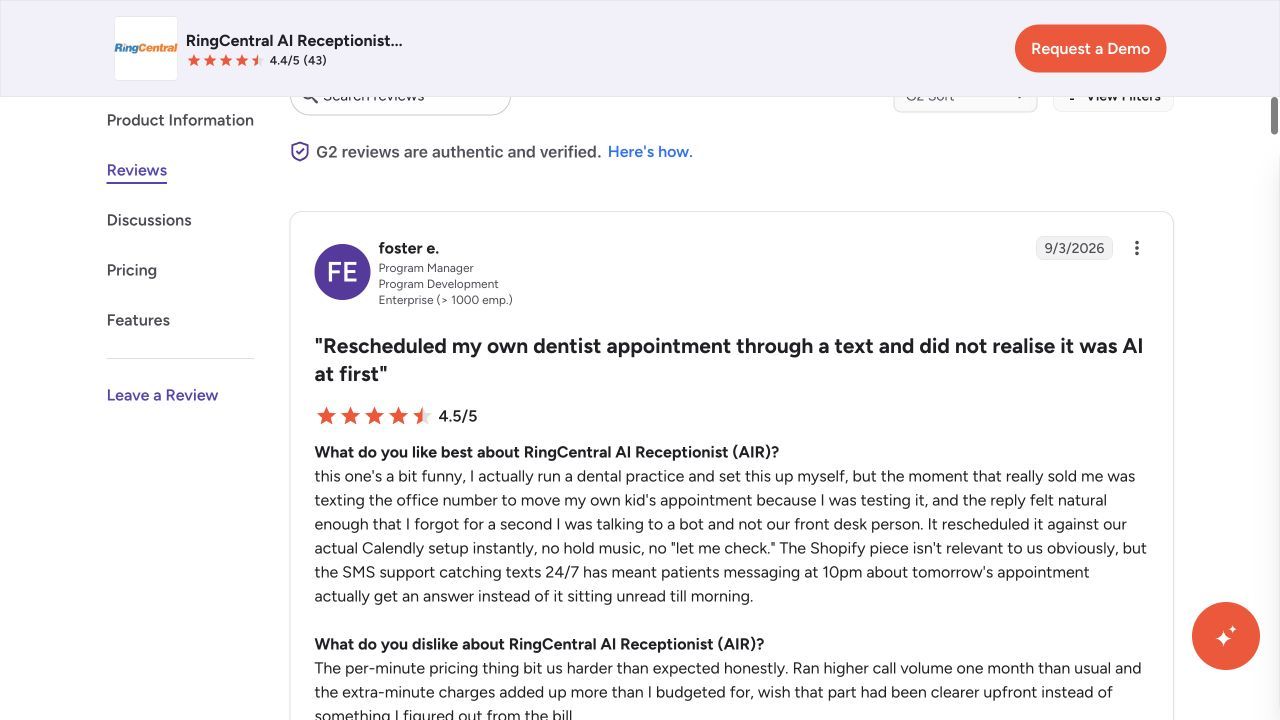
These AIR reviews can describe other regions or earlier versions. The Australian plan limits above still apply.
Pricing
- Australian AIR add-on: A$62 per account per month for 100 minutes, plus the required RingEX subscription.
- Additional minutes: A$0.80 each; the pricing page describes 30-second rounding.
- Additional minute bundles are available. Include the phone subscription and applicable tax in the total.
Compare the full operating cost of an AI answering service
Choose the operating model before the tariff. A business-maintained AI receptionist, a provider-managed human service and a phone-system add-on require different work from your team. A lower advertised amount is useful only if it buys the required reception task and the business can maintain the resulting setup.
Build the monthly estimate from four components: the required service tier, expected usage above its allowance, any phone or integration subscription, and the human support included in the agreement. Keep setup effort and annual commitments visible even when they do not appear as a separate monthly fee.
- Existing phone platform: RingCentral’s Australian AIR amount is an add-on. Include RingEX before comparing it with a standalone reception subscription.
- Human involvement: Smith.ai’s AI-first allowance is a different proposition from hybrid or human-first coverage. Obtain the terms for the service mix you need.
- Caller mix: Goodcall counts unique customers. Minute-based services respond to conversation length; call-based services respond to the number of handled calls.
- Several channels: My AI Frontdesk bundles more than voice reception. Include its separate messaging and chat allowances in the forecast.
- Task tier: Ring Jenny Professional and Scale have different reception scope. Budget Scale if booking or live transfer is essential.
Use your call history to supply the relevant unit count rather than applying one provider’s allowance to every model. Keep currency, taxes and the applicable regional offer separate. An annual monthly equivalent should be compared with another annual commitment, not silently substituted for month-to-month pricing.
For a trade-specific workload, the AI receptionist for contractors in Australia guide adds job intake and setup-cost considerations. The AI phone answering services in Australia comparison focuses on the local phone setup. Assign ongoing answer maintenance using the AI receptionist FAQ and knowledge base setup guide. If you are replacing that provider, the Sophiie AI alternatives article narrows the replacement shortlist.
Comparison methodology
This guide compares procurement scope: the operating model, required tier, included usage, recurring cost drivers and responsibilities after setup. Prices and product limits use the published information and screenshots captured on 28–29 October 2026. Labeled LunaCal numbers are simulation outputs, not independently measured service performance or evidence that a quoted entry plan includes every modeled action. Reviews can refer to earlier versions, other regions or a provider’s human reception service.
AI answering services in 2026: FAQs
Is a free plan a realistic business answering budget?
Only if its allowance and scope fit the actual workload. Ring Jenny’s free allowance is 5 minutes per month; Smith.ai’s AI-first free plan includes 25 calls with additional calls charged. These are different units and do not establish the cost of a booking-heavy or human-heavy service.
How do I compare minutes, calls and unique customers?
Use the same phone history to count all three. Minute billing is affected by conversation length, call billing by handled call count, and Goodcall’s model by distinct customers. Apply each plan’s allowance and overage terms to its own unit instead of comparing only the advertised monthly amount.
Does human escalation come with the AI-first headline price?
Do not assume that it does. Smith.ai lists AI-first, hybrid and human-first options. Ask which calls receive human handling and which quote covers that service. A transfer to your staff is a different staffing arrangement from the provider supplying receptionists.
Why is RingCentral AIR not a complete standalone cost in this comparison?
The Australian offer requires a RingEX subscription. Its AIR add-on is A$62 per account per month for 100 minutes, with A$0.80 per additional minute. The phone subscription and applicable account terms must be included before making a total-cost comparison.
When should I use the annual monthly equivalent?
Use it when evaluating an annual commitment. My AI Frontdesk displays US$99 on monthly billing or US$79 per month billed annually. Compare the billing obligation and cancellation terms as well as the lower monthly equivalent.
Summarize this content with AI